
Supporting the Future of Automotive Manufacturing with Epicor ERP
The rapid growth of electric vehicles (EVs) is reshaping the automotive industry at an unprecedented pace, creating new opportunities and new challenges for manufacturers around the world.
Today, automotive businesses are no longer focused solely on meeting traditional production demands. They must also adapt to EV production requirements, stricter regulatory compliance, supply chain disruptions, labor shortages, and increasingly demanding customer expectations.
For automotive manufacturers in the Philippines, these pressures are becoming more evident across daily operations. Whether producing wiring harnesses, fabricated metal components, electronic systems, aftermarket parts, or custom vehicle assemblies, manufacturers are expected to improve efficiency, maintain product quality, and protect profitability while navigating a rapidly changing market.
As operations become more complex, many manufacturers are finding that manual processes and disconnected systems can no longer keep pace. Spreadsheet-based inventory tracking, delayed production reporting, paper-based quality inspections, and siloed communication between departments often lead to bottlenecks, reduced visibility, and missed opportunities for improvement. To remain competitive, they need connected, real-time systems that support smarter decision-making across the organization.
In this blog, we’ll explore how automotive manufacturers can address these operational inefficiencies with Epicor ERP, examine common manufacturing challenges, and discuss why digital transformation and modern ERP solutions are playing an increasingly important role.
Closing Inventory Gaps in Production with ERP
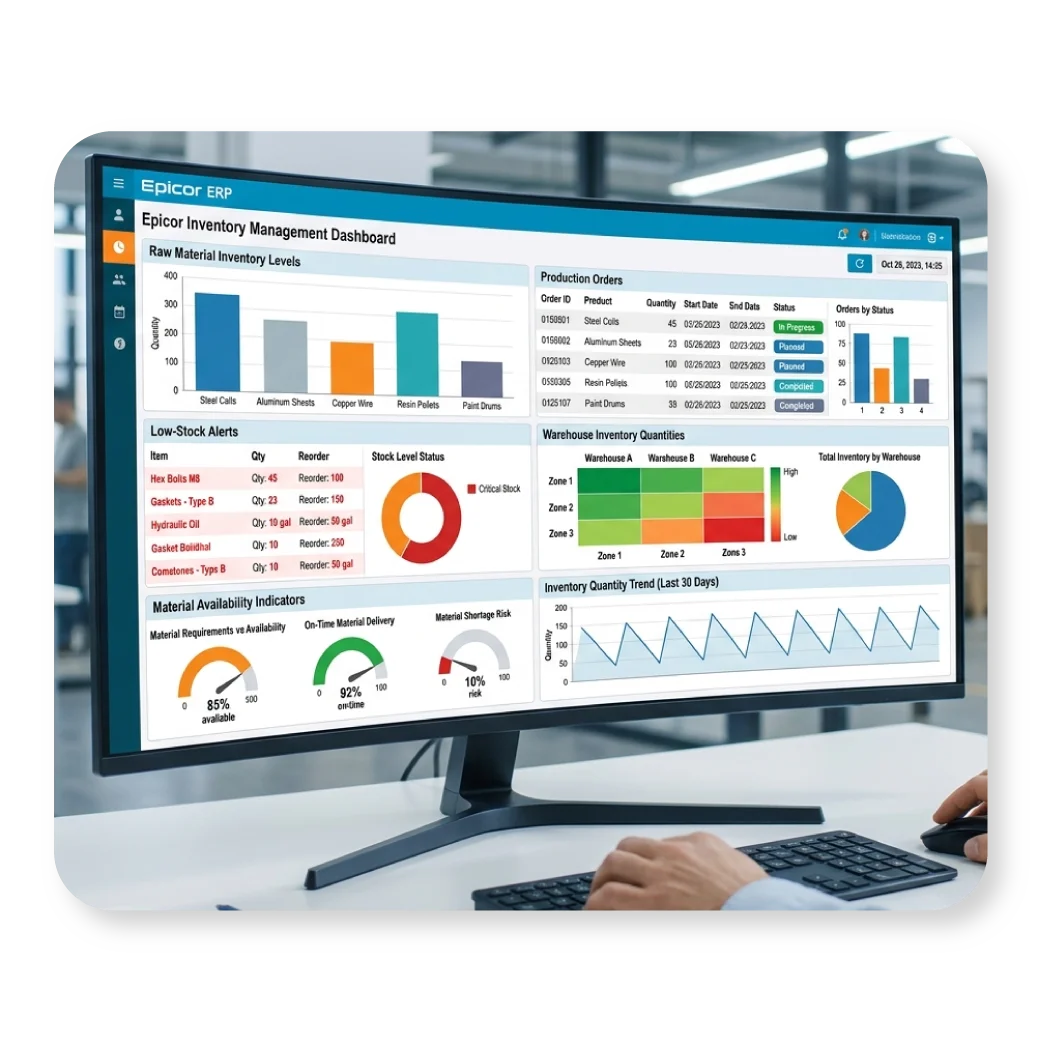
For many automotive manufacturers, one of the biggest operational challenges is ensuring that the right raw materials are available at the right time. Since production schedules depend heavily on material availability, even small inventory inaccuracies can lead to costly delays, emergency purchases, excess stock, and missed delivery commitments.
The challenge is often not caused by a lack of effort from employees. Instead, inefficiencies occur when warehouse, purchasing, and production teams operate with limited visibility into real-time inventory data.
Consider an automotive parts manufacturer in Laguna producing metal components for export clients. The company runs multiple production lines around the clock and manages thousands of raw materials and finished goods. Inventory updates are still recorded manually through spreadsheets at the end of every shift.
One afternoon, production supervisors discover that a critical material listed as available has already been consumed by another production line. With no real-time inventory visibility, production comes to a halt while purchasing teams rush to contact suppliers and warehouse personnel manually verify stock levels. The result is lost production time, rising overtime costs, and uncertainty around delivery schedules.
Situations like this are common when inventory management relies on disconnected systems and delayed reporting.
ERP for automotive manufacturing helps address these challenges by providing a centralized and real-time view of inventory across the organization. Warehouse teams can record stock movements as they happen, while production planners can verify material availability before scheduling jobs. Purchasing teams also gain better visibility into inventory levels, helping them make more informed procurement decisions.
How ERP Improves Quality Control and Product Traceability
Another critical part of automotive manufacturing is quality control. Even minor defects can impact customer trust, create compliance issues, and damage long-term relationships with clients. As production volumes increase and supply chains become more complex, manufacturers need faster and more reliable ways to monitor quality throughout the production process.
However, many manufacturers still rely on paper-based inspections and manual reporting. When a quality issue arises, teams often spend valuable time searching through documents, verifying records, and tracing products across different departments. This can slow down investigations and make it more difficult to identify the root cause of a problem.
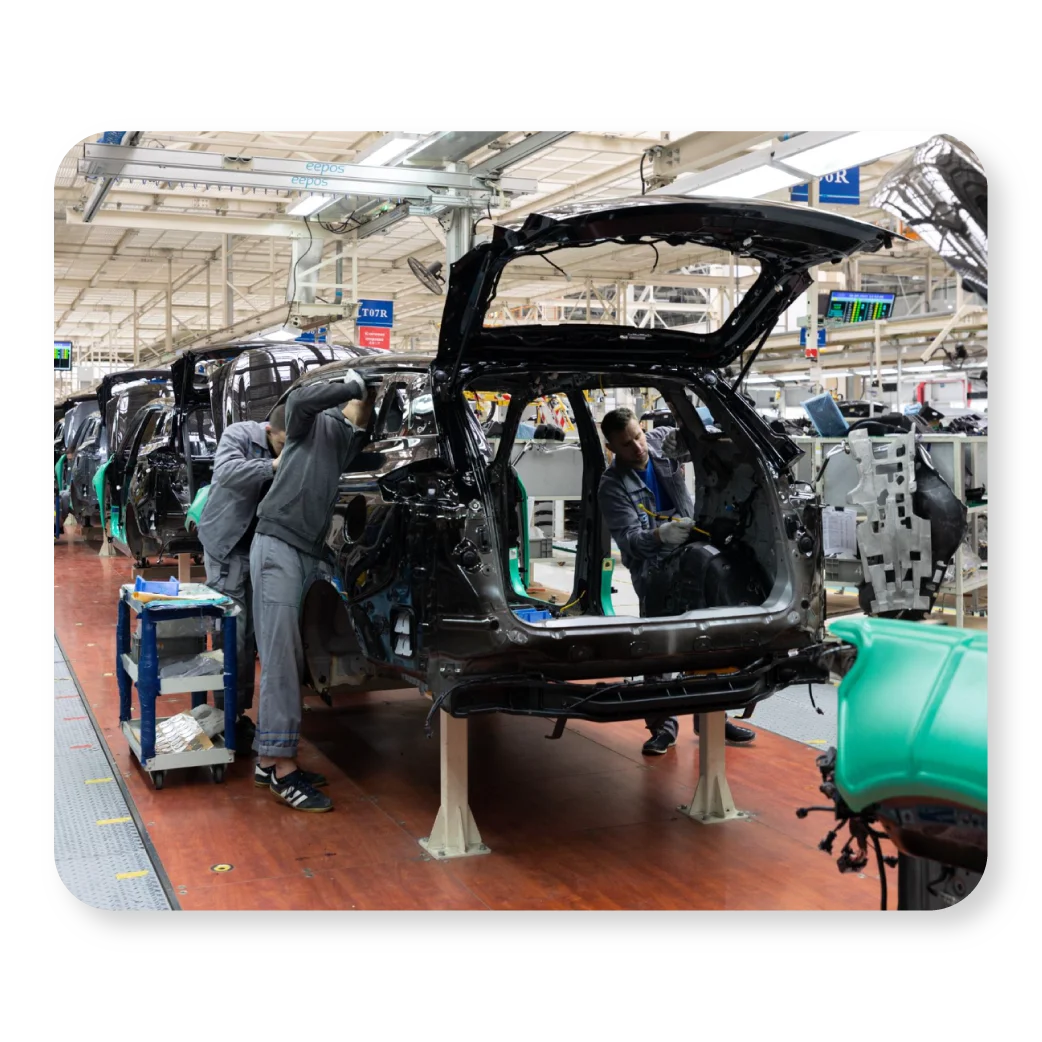
ERP helps simplify this process by centralizing inspection records, production data, and quality documentation in a single system. Instead of digging through paperwork, quality teams can quickly access production history, review inspection results, and identify recurring issues before they become larger problems.
Having complete visibility into production data also improves traceability. Manufacturers can quickly determine:
- Which raw materials were used in a specific batch
- Which production line processed the product
- Which customers received the affected items
- Which inventory may still be available in stock
This level of visibility allows manufacturers to respond to quality concerns faster, minimize the impact of defects, and maintain stronger control over compliance requirements.
ERP Can Keep Production Schedules Aligned
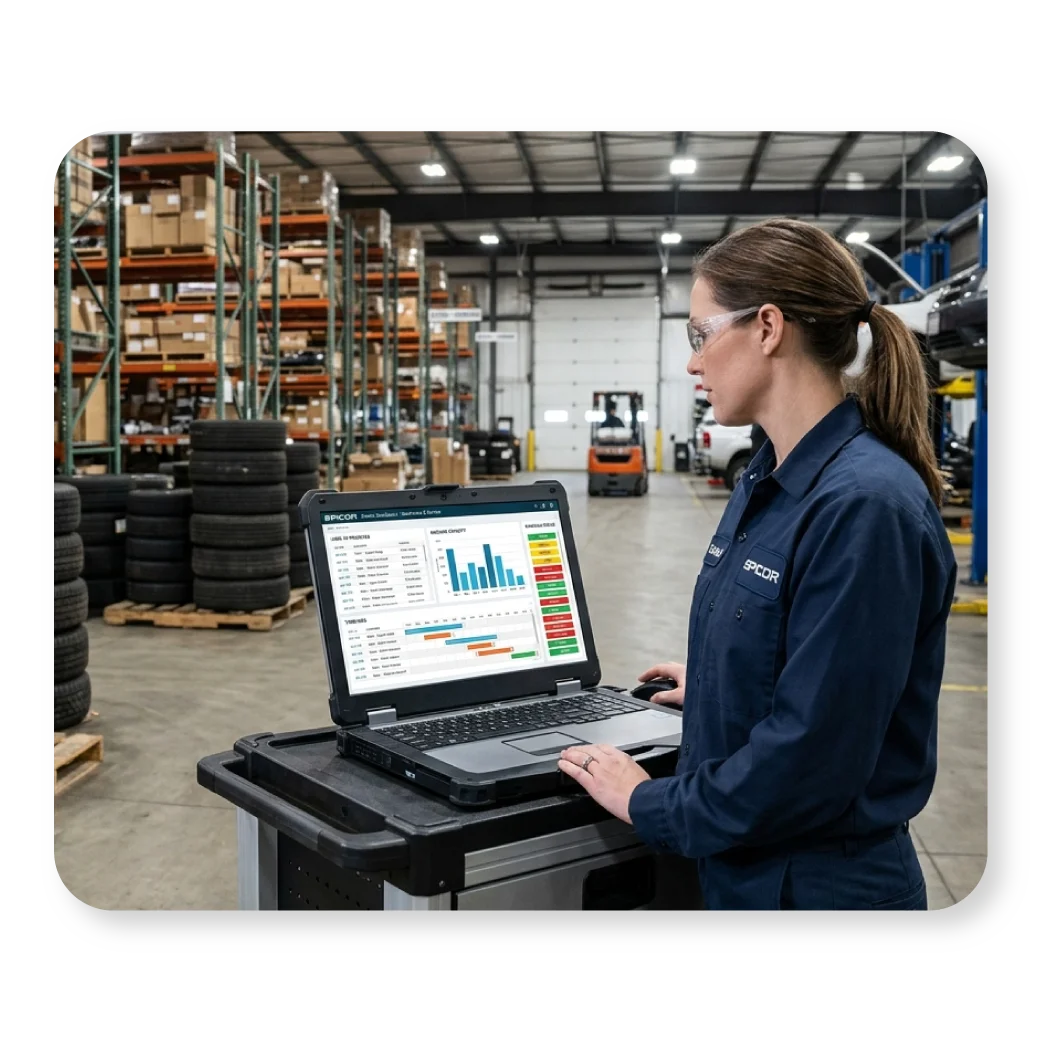
Production scheduling is one of the most challenging aspects of automotive manufacturing because conditions on the factory floor can change quickly. A machine breakdown, delayed material delivery, labor shortage, or urgent customer order can disrupt even the most carefully planned production schedule and create a ripple effect across the factory.
When information is scattered across different systems, teams often spend valuable time chasing updates instead of solving problems. As a result, communication gaps can lead to scheduling conflicts, delayed decisions, and missed production targets.
An ERP software helps address these challenges by providing real-time visibility into production operations. Production managers can immediately see how delays or disruptions affect ongoing jobs, identify potential bottlenecks, and adjust schedules more efficiently. Because all departments are working from the same information, coordination between production, purchasing, warehouse, and customer service teams becomes much easier.
Better scheduling visibility also improves customer communication. When teams have access to accurate production data, they can provide more reliable delivery estimates and keep customers informed about potential changes to timelines.
Prevent Supply Chain Disruptions through ERP
In automotive manufacturing, everything in the supply chain is closely connected. Materials move from suppliers to warehouses and then into production, often on tight timelines. When one part of that chain gets delayed or out of sync, it does not take long before the impact is felt on the shop floor.
In many companies, coordination still relies on spreadsheets, email updates, and manual checking across different systems. These tools can work when operations are small, but as the number of suppliers and materials grows, it becomes harder to keep everything updated and aligned. Teams often end up double-checking information instead of focusing on actual decision-making.
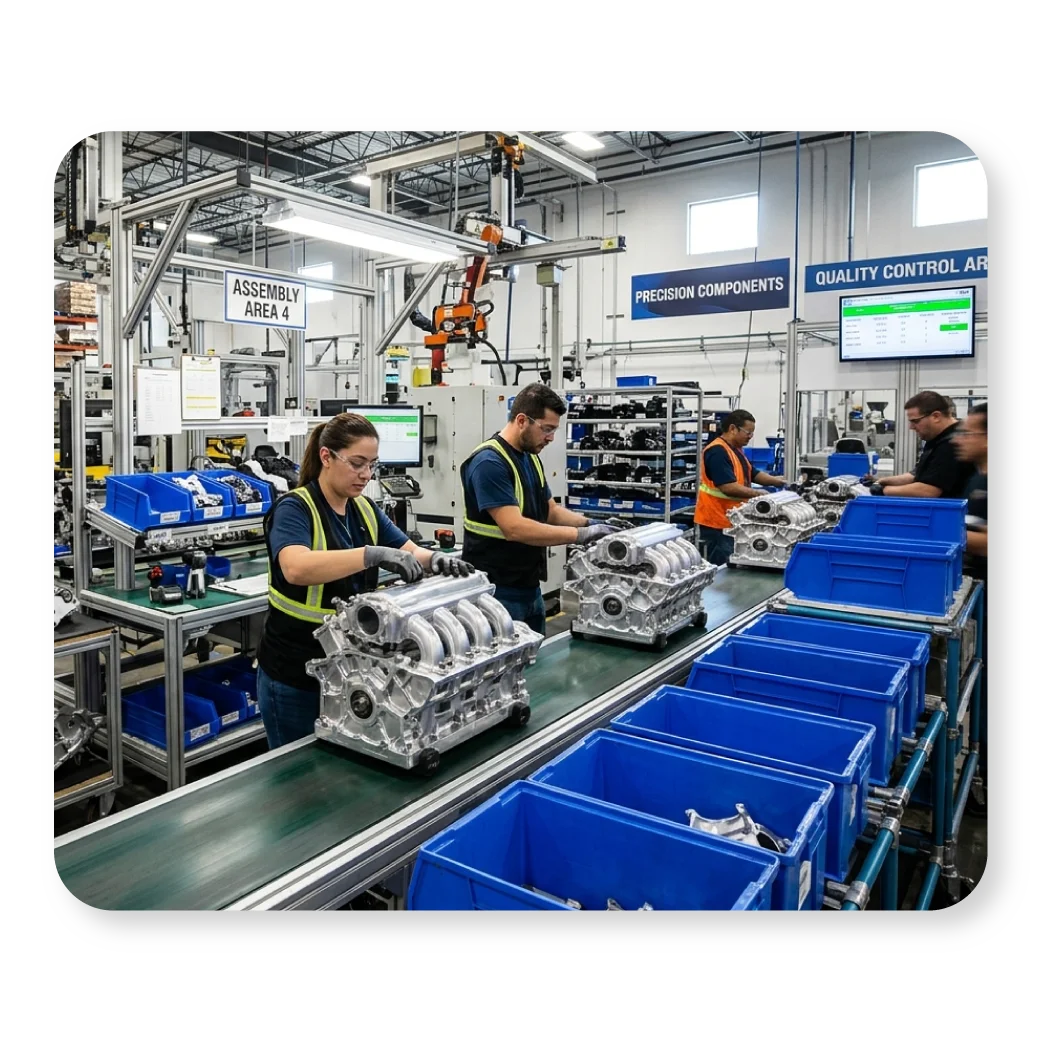
ERP solutions help bring everything together in one system. Purchasing, inventory, supplier updates, and production needs are all connected, giving teams a clearer and more up-to-date picture of what is happening across the supply chain. This makes it easier to spot potential delays early and understand how they might affect production.
With better visibility, warehouse teams know what is coming in, production teams can plan with fewer surprises, and purchasing teams can respond faster when something changes. Over time, this helps reduce last-minute issues and creates a more stable flow of materials.
How Epicor ERP Supports Automotive Manufacturers: Key Features Explained
Epicor ERP helps automotive manufacturers bring everything together in one connected system. Instead of jumping between different tools for inventory, production, purchasing, quality, and supply chain activities, teams can work from a single source of operational information.
Here are some of the key Epicor features and how they support operations in a more practical way:
Advanced Planning and Scheduling (APS)
Helps production teams plan and adjust schedules based on real machine capacity and actual shop floor conditions. Instead of manually reshuffling schedules across spreadsheets, it gives planners a clearer view of workloads across different resources, so they can balance production more effectively.
Material Requirements Planning (MRP)
Works closely with the Bill of Materials (BOM), which defines all the raw materials, components, and quantities needed to produce a finished product. It enables manufacturers to plan what materials to buy based on actual production demand and current inventory levels.
This reduces the guesswork in purchasing and makes it easier to align procurement with real production needs. By understanding future material requirements early, purchasing teams can avoid last-minute orders and reduce the risk of overstocking items that are not immediately needed.
Manufacturing Execution System (MES)
Provides real-time visibility into what is happening on the shop floor. Managers can track production progress as it happens, instead of waiting for end-of-shift reports or manual updates.
It also improves coordination on the factory floor because supervisors can see where work is moving smoothly and where bottlenecks are starting to form.
Inventory Management
Track stock levels, movements, and warehouse activity in real time. This gives teams a more accurate picture of what materials are available and where they are located.
With better inventory visibility, manufacturers can reduce delays caused by missing or incorrect stock information. It also helps improve planning since production and purchasing teams are working with more reliable inventory data.
Lot and Serial Tracking
Makes it easier to trace materials and finished goods throughout the entire production process. This is especially important when manufacturers need to investigate quality issues or review specific batches.
It allows teams to quickly identify where materials came from, which production line handled them, and where finished products were shipped. This level of traceability helps speed up investigations and reduces the effort to isolate affected items.
Quality Assurance and Nonconformance Management
Record inspections, track defects, and manage corrective actions in one system.
It also simplifies following up on issues and ensures corrective actions are properly completed. Over time, this helps improve consistency in product quality and supports compliance requirements.
Automotive EDI Integration
Supports faster and more reliable exchange of documents between manufacturers, suppliers, and customers. This includes purchase orders, invoices, shipment updates, and other key business documents.
By reducing manual encoding, it helps minimize errors and speeds up communication across the supply chain. It also ensures that all parties are working with the same information.
Supplier Portals
Improve collaboration between manufacturers and their suppliers by providing a shared platform for updates on orders, inventory needs, and delivery schedules.
Suppliers can access relevant information directly, which helps them respond more quickly to changes in demand. As a result, coordination becomes smoother and less dependent on manual follow-ups.
Epicor ECM
Move away from paper-based processes by digitizing and organizing important documents in one system. This makes it easier for employees to find what they need without searching through physical files or disconnected folders.
It also improves control over documentation by making it easier to track versions and manage approvals.
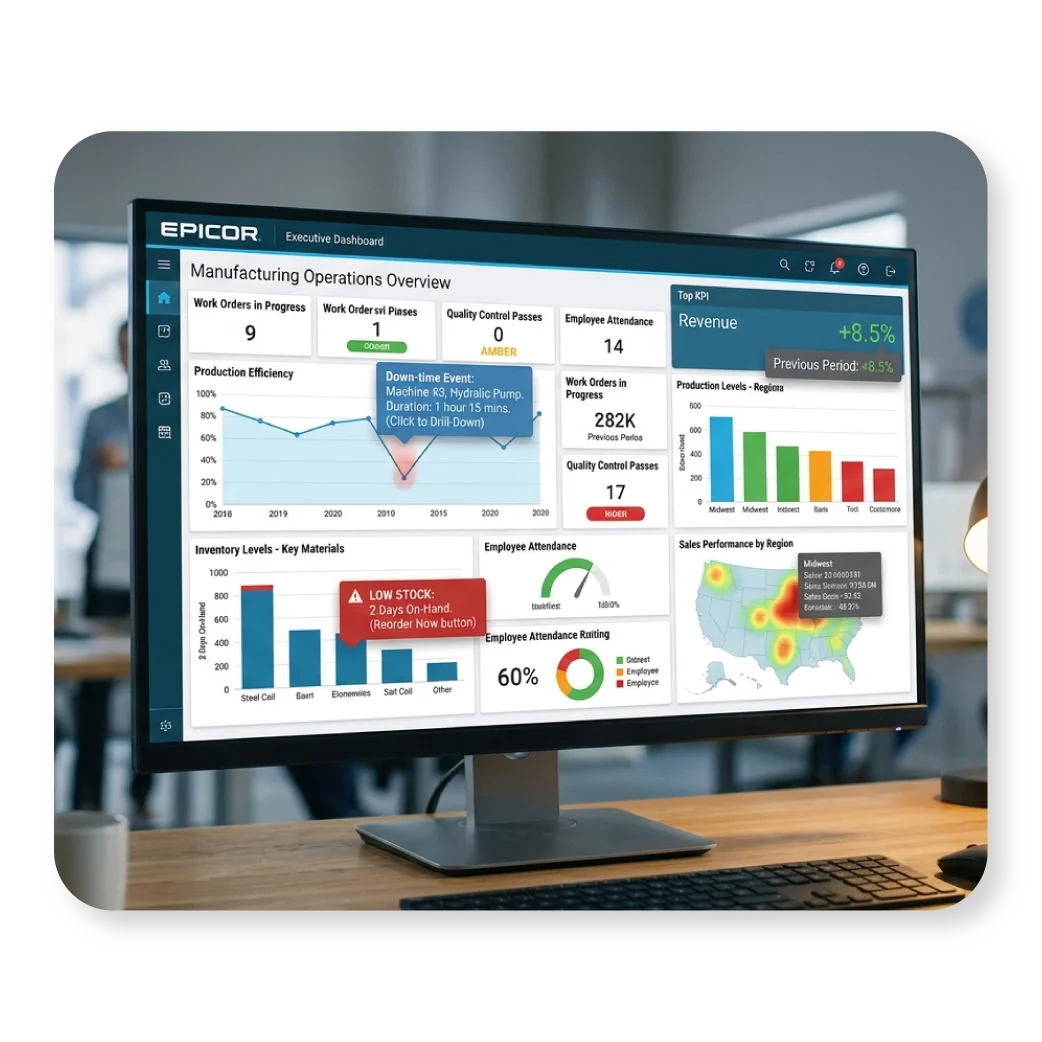
Supporting the Shift Toward Smarter Manufacturing
As automotive manufacturers move toward more connected and data-driven operations, the focus is slowly shifting from isolated improvements to a more integrated way of working. It is no longer just about fixing individual gaps in production or supply chain processes, but about how all these areas work together as a whole.
But as manufacturers take on this level of change, the complexity also increases. Having the right tools is important, but ensuring they are set up correctly and aligned with actual business processes is just as critical.
This is where implementation, guidance, and long-term support become a key part of the journey toward smarter manufacturing. This also leads to an important next consideration: why working with the right ERP partner matters.
Why Working with the Right ERP Partner Matters
Implementing an ERP system is not just a technology upgrade. It affects almost every part of a manufacturing business, from production and inventory management to purchasing, quality control, and reporting. Because of this, success does not depend only on the software itself, but also on how well it is implemented and adopted across the organization.
This is why choosing the right ERP partner becomes just as important as selecting the ERP platform. Manufacturers need more than technical setup support. They need a partner who understands how manufacturing operations actually work on the ground.
This is where Mustard Seed Systems Corporation comes in.
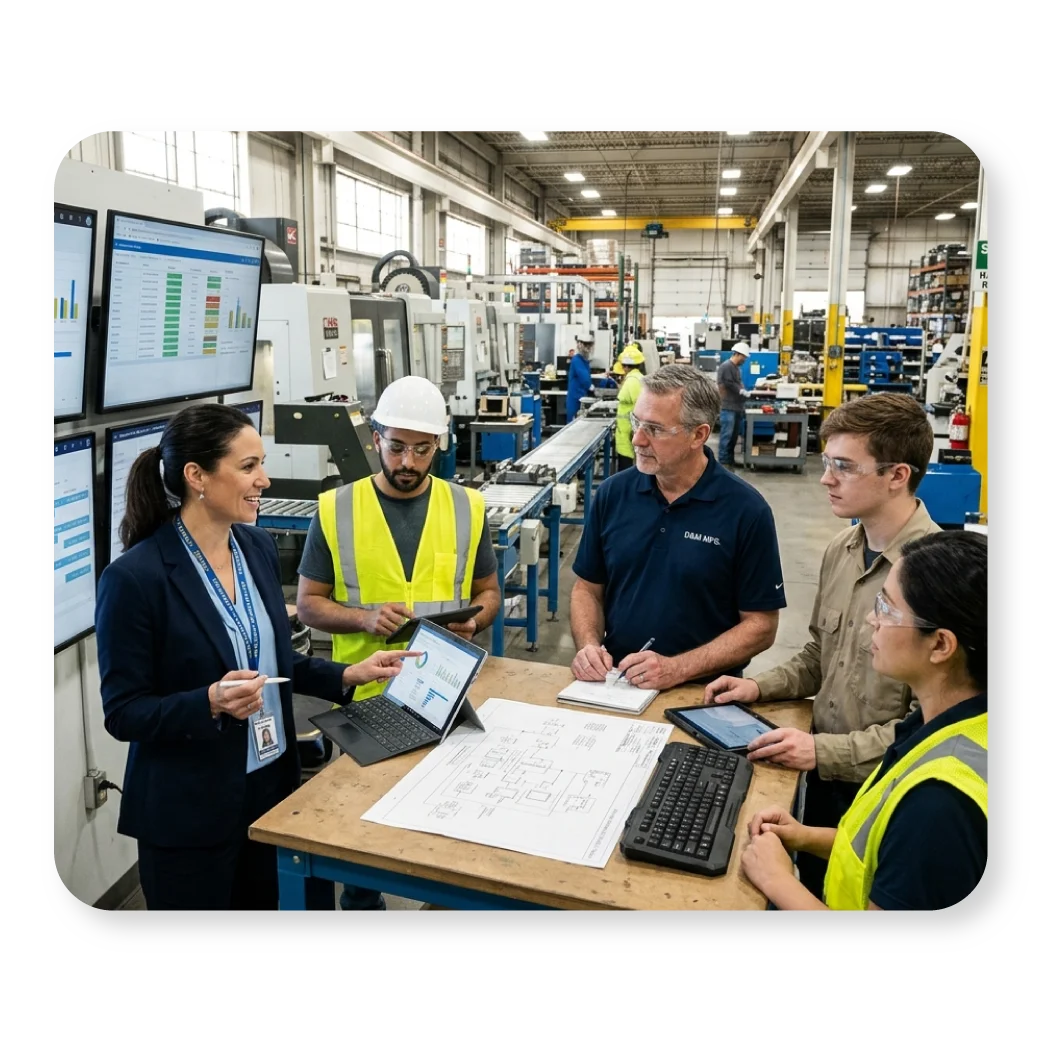
The company provides ERP implementation and business technology solutions with an approach that focuses on understanding each business’s specific workflows, identifying operational gaps, and guiding companies through a more structured transition to digital systems.
For automotive manufacturers considering Epicor ERP, working with experienced consultants can make a significant difference in how smoothly the system is adopted. At the end of the day, ERP success is not just about going live with a system. It is about making sure the system actually works for the people using it every day.
Final Thoughts
As automotive manufacturing continues to evolve, staying competitive is no longer just about increasing output. It is also about having the right systems in place to support better visibility, smoother coordination, and more consistent execution across every part of the operation. When processes are connected and teams are working from the same information, it becomes easier to adapt to changes and keep production running reliably even under shifting demands.
ERP is not just a software investment. It is a step toward building a more organized and responsive manufacturing environment that can grow with the demands of the industry.
Send us a Message
For more information or inquiry about our products and services, kindly fill out the form below.
Get in Touch
