
BIR Revenue Regulations No. 6-2026: New Invoice Requirements for Creditable Withholding Tax Information
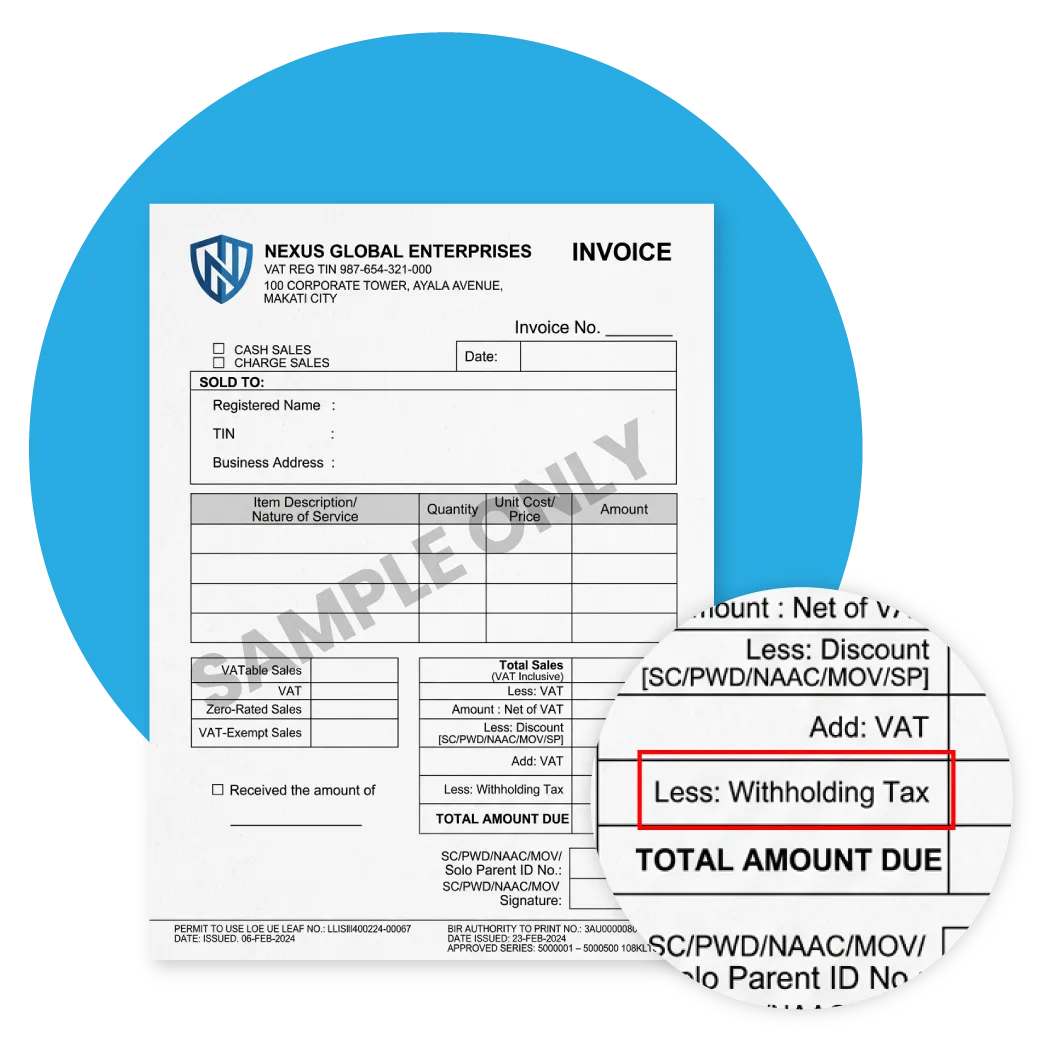
The Bureau of Internal Revenue (BIR) has issued Revenue Regulations (RR) No. 6-2026, dated October 1, 2026, to amend the mandatory information required on invoices under Revenue Regulations No. 7-2024. The amendment covers the inclusion of creditable withholding tax information in invoices.
For businesses in the Philippines, this update highlights the importance of reviewing invoice formats, accounting procedures, and tax documentation to ensure that the required information is properly captured and maintained.
As businesses continue to manage sales, supplier transactions, and tax reporting, understanding the updated BIR invoice requirements can help accounting teams prepare their processes and identify areas that may need adjustment.
What Is BIR RR No. 6-2026?
BIR Revenue Regulations No. 6-2026 is an issuance that amends the mandatory information contained in invoices under Section 6(B) of RR No. 7-2024 to include creditable withholding tax information.
Creditable withholding tax is tax withheld from certain income payments and credited against the income tax liability of the recipient, subject to applicable tax rules. It is relevant to businesses that make or receive payments covered by withholding tax requirements.
The new regulation focuses on the information required on invoices. Businesses should review the full text of RR No. 6-2026 to determine the specific requirements applicable to their transactions and invoicing processes.
What Does RR No. 6-2026 Mean for Businesses?
The regulation makes it important for businesses to review how their invoices capture and present withholding tax information.
Here are key areas that accounting and finance teams should consider.
1. Review Existing Invoice Formats
Businesses should check whether their current invoice templates can accommodate the required creditable withholding tax information.
This review may include sales invoices, invoice layouts generated by accounting software, and other relevant transaction documents. Any changes should be based on the specific requirements stated in the regulation.


2. Check Accounting and Tax Documentation
Accurate tax records help accounting teams reconcile transactions and prepare supporting documents for tax reporting.
Businesses should review how withholding tax information is recorded, checked, and linked to the corresponding transactions. Consistent documentation can also help reduce discrepancies during reconciliation.
3. Coordinate with Accounting and IT Teams
Changes to invoice requirements may involve both accounting procedures and system configuration.
Accounting teams should identify the information that needs to be captured, while IT teams or software providers can assess whether invoice templates, transaction fields, and reporting functions require updates.


4. Assess Current Accounting or ERP Systems
Businesses using accounting or enterprise resource planning (ERP) software should assess whether their systems can support the required invoice information.
Depending on the system and its configuration, this may involve reviewing invoice templates, transaction records, tax settings, and reporting processes.
Companies should confirm the availability of any required changes with their software provider and test updated invoice formats before using them for actual transactions.
How Can ERP Software Help with BIR Tax Compliance?
ERP software connects key business processes, including accounting, sales, purchasing, inventory, and financial reporting. When properly configured, it can help businesses maintain consistent transaction records and support their tax compliance processes.
For businesses preparing for BIR invoice requirements, an ERP system may help with the following:
- Invoice management: Maintain standardized invoice formats and required transaction details.
- Accounting records: Record sales, purchases, and related financial transactions in a structured system.
- Tax documentation: Keep relevant transaction information available for review and reconciliation.
- Financial reporting: Provide accounting teams with access to organized financial data.
- Process monitoring: Help identify missing information or discrepancies through appropriate system controls and review procedures.
However, using ERP software does not automatically guarantee BIR compliance. Businesses must ensure that their systems are correctly configured, updated when necessary, and used according to applicable tax regulations.


Preparing Your Business for BIR RR No. 6-2026
To prepare for the updated invoice requirements, businesses can start with these steps:
- Read the official regulation. Review the complete text of RR No. 6-2026 to understand the specific requirements.
- Evaluate current invoice templates. Identify whether the required creditable withholding tax information is properly accommodated.
- Review accounting procedures. Check how withholding tax information is recorded, reconciled, and maintained.
- Consult your software provider. Determine whether your current accounting or ERP system needs configuration changes or updates.
- Confirm compliance with your tax adviser. Verify how the regulation applies to your business and transactions.
Taking these steps can help businesses identify potential gaps early and prepare their accounting processes accordingly.
ERP Software Solutions for BIR Compliance in the Philippines
Choosing the right ERP software helps businesses manage accounting, invoices, and financial records as BIR requirements evolve. Mustard Seed Systems Corporation (MSSC) is a trusted ERP provider in the Philippines, offering solutions tailored to different business needs.
Microsoft Dynamics 365 Business Central
- Integrates with Microsoft Excel, Outlook, and Teams.
- Includes Microsoft Copilot AI capabilities to support business tasks and data analysis.
- Supports financial management, inventory, and reporting.
- Supports multi-company and multi-subsidiary management.
- Manages inventory across multiple warehouses.
- Handles transactions in multiple currencies and supports consolidated financial reporting.
- Supports manufacturing operations, including production planning and scheduling, depending on the solution implemented.
- Connects inventory, materials, purchasing, and production costing.
- Helps manufacturers monitor operational and financial performance.
- Integrates accounting, sales, purchasing, and inventory management.
- Provides financial and operational reporting.
- Helps small and midsize businesses manage day-to-day operations.
These ERP solutions can support organized financial records and invoice management when properly configured. Businesses should assess their systems against the specific requirements of BIR RR No. 6-2026 to determine whether updates are necessary.
Choosing the right ERP software can help accounting and finance teams maintain organized records, improve transaction visibility, and support their ongoing tax compliance processes.
